How Lighting Impacts Kitchen Colors: Why Your Cabinets Look Different in Michigan Winters
How Lighting Impacts Kitchen Colors: Why Your Cabinets Look Different in Michigan Winters
Estimated Reading Time: 10–12 minutes
You may have noticed that your kitchen cabinets look warmer and golden in summer, but take on a cooler, grayish tone in winter. The wall color that felt soft beige in July suddenly looks pale green in January.
It's not your imagination — it's lighting.
In northern climates, especially places with long winters, seasonal light changes dramatically affect how colors appear. Natural sunlight shifts in tone and intensity, while artificial lighting does the heavy lifting for most of the day. Together, they can completely transform how your cabinets, countertops, and walls look.
This guide explains why this happens and what you can do to keep your kitchen colors beautiful and consistent year-round.
1. Why Your Kitchen Looks Different in Winter
Light plays a bigger role in interior design than most people realize. In the summer, Michigan homes are filled with bright, warm natural light that enhances yellows, creams, and wood tones. In winter, however, shorter days and overcast skies make that same light cooler and softer, shifting how your eyes interpret color.
In short:
Sunlight's temperature changes with the season
Snow, cloud cover, and low sun angles all alter indoor light quality
Artificial lighting often replaces natural light for most of the day — and not all bulbs produce the same warmth
So, when your white cabinets suddenly seem blue or your gray walls feel dull, it's not the paint or finish — it's the light around them.
2. The Science of Light and Color
Color doesn't exist in isolation — it's how your eyes perceive reflected light. That means the same paint, wood, or countertop can appear entirely different depending on the lighting source.
Understanding Color Temperature
Lighting is measured in Kelvin (K) and determines how "warm" or "cool" the light appears.
Lighting TypeKelvin (K)Color FeelEffect on SurfacesWarm White2700K–3000KSoft yellowEnhances reds, creams, brownsNeutral White3500K–4100KBalanced whiteShows truest color representationCool White / Daylight5000K–6500KBlue-tinted lightEmphasizes blues and grays
A cream-colored cabinet might appear cozy beige under 3000K bulbs — but under cool daylight at 6000K, it can turn pale gray or green.
3. How Michigan Winters Affect Lighting
Winter light in northern climates is very different from summer light. It's softer, cooler, and lower in the sky.
What this means indoors:
Less natural sunlight entering through windows
Shorter daylight hours (more reliance on artificial lighting)
Cloud cover that filters out warm color tones
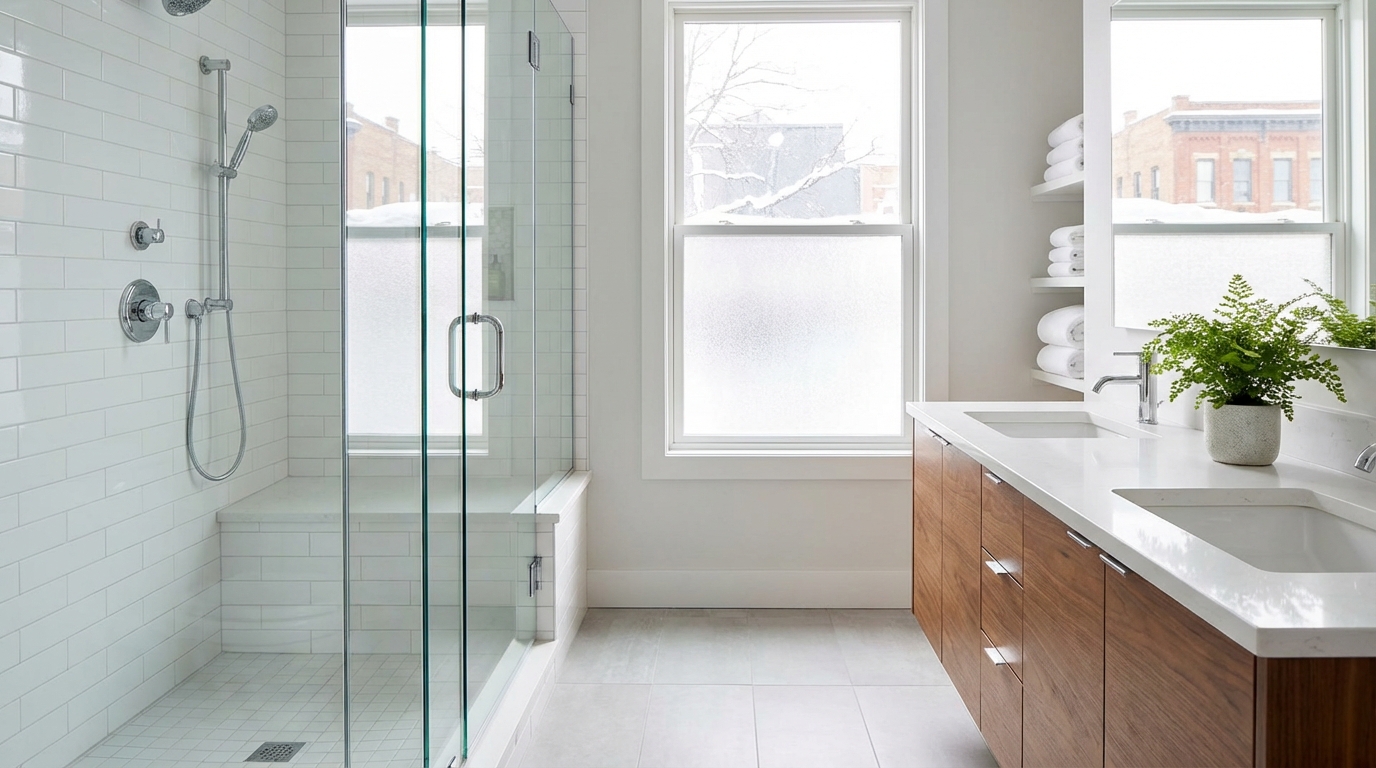
Snow reflection adding blue undertones to indoor light
Even the way snow reflects light can trick your perception — it bounces cooler light into the room, especially during overcast days. That's why warm paint colors can feel duller or grayer, and natural wood tones lose some of their richness.
4. Natural Light: How Direction and Season Shape Color
The direction your kitchen faces also determines how color behaves throughout the day.
Here's how orientation affects tone:
North-facing kitchens: Receive cool, consistent light all day. Warm cabinet colors (like cream, taupe, or light wood) help balance the chill
South-facing kitchens: Get warm, direct light — colors appear brighter and more vibrant, sometimes even washed out
East-facing kitchens: Golden morning light that fades to cool afternoon tones. Great for balancing warm neutrals
West-facing kitchens: Cooler mornings but rich, warm light in the evening. Ideal for darker cabinetry
In winter, these effects become more pronounced as the sun sits lower in the sky, casting longer shadows and creating deeper contrasts.
Tip: Take note of how your kitchen looks at different times of day — it can guide both lighting choices and paint selection.
5. Artificial Lighting: The Great Equalizer
Since winter means less natural light, your artificial lighting setup becomes crucial to how your kitchen feels and functions.
Three main types of lighting:
Ambient lighting – General illumination (ceiling lights, recessed fixtures)
Task lighting – Focused light for work areas (under-cabinet, pendants)
Accent lighting – Decorative illumination that highlights design features
How to balance lighting for accurate color:
Use LED bulbs in the 3000K–4000K range — these create a natural, neutral white that keeps colors true
Mix warm and cool lights strategically: warm light enhances coziness, cool light boosts clarity
Look for high CRI (Color Rendering Index) bulbs — CRI 90+ ensures colors appear as they should
Layer multiple lighting types to eliminate shadows and even out tone
Example: A quartz countertop might look dull under a single overhead fixture, but when paired with under-cabinet lights and a neutral LED overhead, its pattern and color come alive again.
6. How Cabinet and Countertop Finishes React to Light
Materials react differently to lighting based on texture, sheen, and tone. Understanding this helps you choose combinations that look balanced all year.
Cabinet Finishes
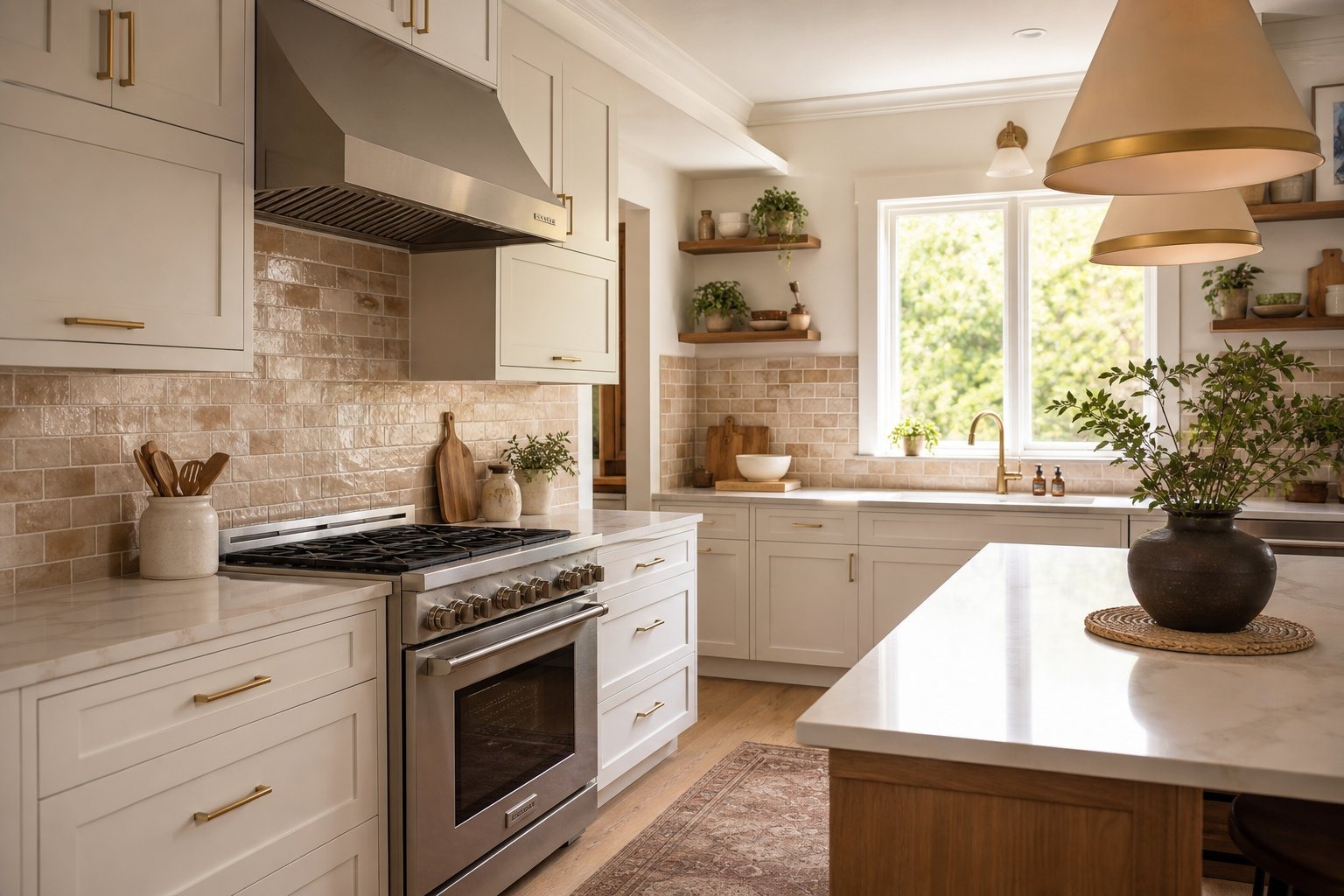
Painted surfaces: Reflect more light, changing hue under different temperatures. A gray cabinet might lean blue under cool light or taupe under warm
Stained wood: Absorbs light, appearing darker in winter and lighter in summer
Matte finishes: Diffuse light softly for a subtle, consistent tone
Gloss finishes: Reflect light dramatically — bright but sometimes prone to glare
Countertops
Light quartz or marble: Can appear cooler or even slightly gray in winter's weak daylight
Dark granite or soapstone: Absorb light; may need under-cabinet lighting to keep color depth visible
Note: Small accents — like metal hardware and backsplash tiles — can also shift tone slightly depending on the surrounding light temperature.
7. Lighting Solutions for Year-Round Color Consistency
If your kitchen colors seem to "change with the seasons," lighting adjustments can help.
Practical solutions:
Install dimmable LED fixtures so brightness and tone can be adjusted throughout the year
Use under-cabinet lighting to reduce shadows and highlight true countertop color
Add warm-toned bulbs in winter (2700K–3000K) to counteract cool natural light
Consider smart bulbs with adjustable warmth for flexible control
Repaint with color-balanced neutrals (greige, warm white, or natural taupe) that adapt to changing light
Bonus tip: Test paint and cabinet samples under multiple lighting conditions before finalizing. Check them morning, afternoon, and evening — and in both summer and winter, if possible.
8. When to Adjust or Upgrade Lighting
Sometimes, the problem isn't the paint or cabinetry — it's outdated lighting.
Signs your lighting needs improvement:
Cabinets look drastically different between day and night
Kitchen feels dim or shadowed even with all lights on
Countertops appear flat or dull in photos
You find yourself squinting or overcompensating with bright bulbs
Simple upgrades:
Replace older halogen or fluorescent bulbs with LEDs that have variable color temperature
Add pendants or sconces to brighten dark corners
Update fixture placement to reduce glare and shadow lines
A lighting refresh is one of the simplest design changes that can completely transform how your kitchen feels — especially in long, gray winters.
9. The Psychology of Light and Mood in the Kitchen
Lighting doesn't just affect color — it affects emotion.
Warm light (2700K–3000K):
Promotes comfort, coziness, and appetite
Ideal for family spaces and evening dining
Cool light (5000K–6500K):
Feels crisp, clean, and energizing
Great for task areas and morning productivity — but can feel sterile in excess
Balancing warm and cool tones throughout the day can help maintain both mood and aesthetic harmony. During long winters, mimicking natural daylight indoors can improve not just color balance, but energy and well-being too.
Summary: Light Changes Everything
Lighting is the unsung hero of kitchen design. It determines how every color, finish, and texture appears — and how it feels.
Key takeaways:
Seasonal changes in light can dramatically shift how colors appear
Natural light direction, bulb temperature, and finish type all affect perception
Use layered lighting and color-balanced LEDs for consistent results
Always test samples under multiple lighting conditions before committing
When you treat lighting as part of your design palette — not an afterthought — your kitchen maintains its beauty and warmth year-round, no matter how gray the sky outside may be.